Later this month and early next month we will have a lot of conversation around stewardship, specifically the stewardship of money. This emphasis will lead to our Stewardship Sunday called “Consecration Sunday” on November 8th. You will hear more about this in coming weeks.
This morning the scripture readings also direct us to matters of stewardship. Today’s scripture deals with stewardship in general, God’s call for us to be stewards of all things.
Stewardship is an important word in the Christian vocabulary. What is stewardship?
My working definition is this: Stewardship is taking care of something that belongs to someone else. Stewardship is taking care of something that belongs to someone else.
We are stewards of money and possessions. We are stewards of our work and our relationships. We are stewards of time. We are stewards of the good earth.
Stewardship is taking care of what belongs to someone else.
The parable of the wicked tenants is a parable about stewardship gone awry. It’s a parable about how tenants turned their back on stewardship and sought to be owners of what was entrusted to them.
A man planted a vineyard and leased it to tenants while he went away for a while to another country. They were to tend to the vineyard. At harvest time the landowner sent servants to collect the produce from the vineyard. Instead they were not given a welcome, treated poorly, and the tenants raged violence upon them. The tenants beat them up, killed one of them, and stoned another.
The landowner sent more servants to collect the produce but they were treated the same way. Finally, he sent his son. The landowner believed that these misbehaving tenants would listen to his son, but he was treated the same way. His son was seized, thrown out of the vineyard, and killed.
It’s a grim story that is characteristic of many of the parables of Jesus in the Gospel of Matthew. In this parable, the tenants were to take care of what belonged to the landowner, to tend the vineyard in the landowner’s absence. Instead of tending to what belonged to someone else, they had made it their own. Instead of stewarding what belonged to the landowner, the tenants behaved as if it belonged to them.
It’s a tragic tale. Sent to tend to or take care of what belongs to another, the caretakers want to take it over. It’s a common story.
Friends in Christ, we are called to be steward of what belongs to someone else and that someone else is God. We lose sight of the fact that we are stewards instead of proprietors of God’s good gifts, so we behave otherwise.
We are called to steward the earth that belongs to God but we have acted as if it belongs to us by burning fossil fuels, polluting the air with toxins and emissions that have degraded the earth. Acting as if it were our own we end up damaging the good earth.
We are called to steward friendships, family, and neighbors as gifts of God. Too often we can be possessive in our relationships with others and too often we ignore the neighbor, and prefer to tend only to our own business.
We are called to steward time but time can overwhelm us and overtake us. Instead of receiving the day as a gift from God we can get stretched beyond our capacity with all that we have to get done. Sooner or later time consumes us and the mantra, “I’m so busy” strangely becomes a badge of worthiness instead of seeing it as the disease that it is.
We are called to steward our possessions and money but often find ourselves on a never ending treadmill of wanting more and feeling we need more to the point where we cannot get enough. Our desire for more and more stuff may seem life-giving but it can weigh us down, especially when stuff becomes a marker of success, status, or being worthy.
We are called to be stewards in our work and vocation but too often we get caught up in making it about us by striving to be the best. Striving for excellence is a good thing but when it becomes an end in itself, we so easily forget who we are working for.
We are called to steward all things. The offertory prayer we use today and use often says it well:”we offer with joy and thanksgiving what you have first given us – ourselves, our time, and our possessions, signs of your gracious love.”
The parable of the wicked tenants puts in grim and dramatic language a reminder of the consequences of pretending we are proprietors or owners of the world instead of stewards serving God. By striving to gain the whole world for ourselves we end up losing our souls.
The image of the vineyard is used in scripture and is a common way to speak about the people of God. What if we applied the image of the vineyard to the church and the world in which we live? What if we saw ourselves more and more like stewards working in God’s vineyard, called to bear fruit not for ourselves but for others?
Or, what if we were to find stewardship role models and seek to emulate them. We can lean into the great communion of saints, those who have gone before us and those who are sitting next to us this morning. People whose lives bunt with the light of Christ who are not wicked tenants but faithful tenants?
One such role model is St. Francis of Assisi. On our church calendar of commemorations and festivals today, October 4, is the commemoration of St. Francis. There are many attributes of this famous saint that are endearing and worth imitating. He was friend to animals. He ministered to beggars and the sick. He held deep reverence for the earth and those to whom he ministered. He was a steward of God’s good earth and God’s good gifts.
I never before thought of St. Francis as a steward but now it makes some sense to me. The crux of his stewardship was love and reverence. Instead of practicing stewardship as fulfilling a list of demands, Francis showed us that stewardship is a matter of the heart. He demonstrated that stewardship of land and animals and people is a matter of being in relationship with them as friends of God.
For Francis, the moon wasn’t just the moon, but “Sister Moon.” The sun wasn’t just the sun, but “Brother Sun.” He spoke of “Sister water,” “Mother Earth,” “Brother Bird,” Brother Wolf,” “Sister Lark.” Francis also saw in the poor and in the lepers he cared for the very face of Christ.
Stewardship then becomes a way of living and arises hearts dedicated to God. Francis saw creation as God’s handiwork and he revered it. As he cared for beggars and lepers while being married to what he called “Lady Poverty,” he was a steward of relationships, reaching out to the neediest neighbors whom he regarded as precious in God’s sight.
As a way of life, stewardship, being caretakers of what belongs to God, changes us over time. Stewardship is a matter of how you view your possessions, money, work, relationships and the creation. We begin to have reverence, like Francis, for the earth, for people, neighbors in need, and how we regard our stuff, as gifts from God for our enjoyment but mostly as gifts to further the work of God’s Kingdom.
Reverence for the earth is an antidote to exploiting the earth. Viewing all persons as neighbors, not just people we like us helps us to turn away from belittling and judging others. When we practice a respectful use of our possessions we discover over time, the less we need stuff, the less stuff controls us.
Friends in Christ, at the waters of baptism you were called to be workers in the vineyard. Each of us is uniquely gifted and what part of the work each of us does varies greatly, but the common thread is to use what has been entrusted to us (whatever it is) toward the stewardship of what belongs to God. Taking the example of Francis, we can see our work and our callings as holy and receive each day as an opportunity for reverence.
Not unlike St. Paul writing to the Philippians, we want to know Christ and the power of his resurrection.
After speaking the parable of the wicked tenants, Jesus critiqued the Pharisees and chief priests whom he was talking to and jogged their biblical memories when he said, “Have you never read in the Scriptures:
“The stone that the builders rejected has become the chief cornerstone;
this was the Lord’s doing, and isn’t amazing in our eyes?”
The parable of the wicked tenants ends in death and destruction but the Son of God who was rejected and killed was raised by God from death. The resurrection vindicates everything Jesus said and did. Jesus is now the chief cornerstone. Lean on him, build your lives on him, and trust him.
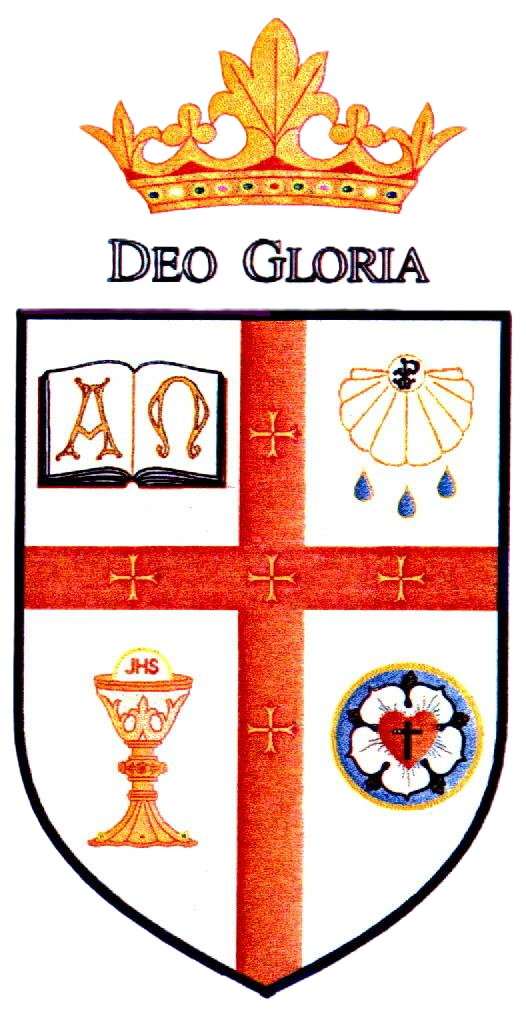
The words printed on the cornerstone of this building reads Deo Gloria. The phrase Deo Gloria means “glory to God alone.” That cornerstone points to Jesus as the true cornerstone which makes this place a place of worshiping God and a place to depend upon the cornerstone that is Christ to live and serve and love now and for future years. And it is marvelous in our eyes. Amen.